
According to Rajeev Jayadevan, co-chairman, national Indian Medical Association Covid Task Force, the current scenario qualifies as a wave.

One needs to charge the device every four days, which can provide over 65,000 blood readings and counts.

Open order books in February breach 700,000; wait period for some models exceed a year.
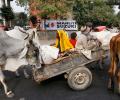
Maruti Suzuki says it has sold at least one car in 418,000 villages.

With just a month left in this financial year, electric two-wheeler sales, so far, are at just 62 per cent of the ambitious target of 1 million units set for 2022-23 by the NITI Aayog. According to VAHAN data, compiled by the Society of Manufacturers of Electric Vehicles (SMEV), 620,006 units of electric two-wheelers were sold across the country in FY23 until February 21. Though the industry may miss the 1-million target, sales in FY23 are already up 146 per cent from 249,621 units sold in FY22.

Maruti Suzuki India (MSIL) - the market leader in small cars - is eyeing the top spot in the sports utility vehicle (SUV) segment within a year - with a 33 per cent share of the pie. The company has been selling two SUVs - the Brezza and the Grand Vitara - and will start deliveries of the Jimny and the Fronx from March-end, and has set a target of growing its share from the current 11.5 per cent of the SUV market to 33 per cent by the end of 2023-24. The SUV segment is roughly about 42 per cent of the total passenger vehicle market, or around 1.3 million units.

Balkrishna V Doshi, who won the Pritzker Award in 2018 -- which is equivalent to the Nobel Prize in architecture -- passed into the ages this week. Sohini Das recalls an encounter with the the legendary architect, who was posthumously awarded the Padma Vibhushan in this year's Republic Day honours list.

Dealerships, too, are going all out to roll out the red carpet for women.

Both are finding it difficult to sell one each of their plants -- Chennai Maraimalai Nagar (Ford) and Talegaon near Pune (GM) -- and are finding the road blocked by employee severance snarl-ups, report Sohini Das and Shine Jacob.

'We seem to be in a situation where we can do little, and nothing needs to be done anyway.'

The electric Chetak has already sold close to 25,000 units in India, and the European version will be based on the same platform.

While Mercedes-Benz India expects 25 per cent of its India sales to come from EVs in the next four years, BMW says it estimates around 10 per cent of sales to come from those in the near future.
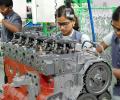
Cummins India will soon start producing fuel-agnostic engine systems at the Tata-Cummins plant in Phaltan in Satara district of Maharashtra, senior officials at Cummins India said. The firm will start limited production by the end of 2023 and mass production will likely begin by 2024, the officials said.

The Kraken COVID-19 variant accounts for almost 41 per cent of all Covid infections.

'Enterprises have become more demanding in terms of their productivity expectation from their employees.'

Clock 11% growth in the first 11 months of 2022.

'The protective effect of the vaccine lasts for about nine months to a year.' 'For health workers that period is already over. This is the right time to augment their immunity.'

Indian drug firms continue to work closely with the FDA, and most have also appointed consultants to help them grasp the regulatory minutiae in the US.
Less than 30,000 booster doses daily in December.

The joint inspections is to ensure the safety, efficacy, and quality of drugs available in the country
 © 2026 Rediff.com - Investor Information - Advertise with us - Disclaimer - Privacy Policy - Sitemap - Feedback - About us - Terms of use - Grievances